Buying a home is probably the biggest cheque you’ll ever write, and in a growing city like Kurnool the choices can pull you in ten directions at once. New apartments in Kurnool are coming up across Doctors Colony and beyond, brochures all start to look the same, and every builder tells you theirs is the best. So how do you actually tell a good one apart from a risky one?
We’ve been building homes here for ten years, and the buyers who end up happiest are the ones who checked a few basic things before they paid anything. That’s really all this guide is — the same seven checks we’d walk a friend through if they sat across the table from us and asked, “What should I look at before I book?” No jargon, no scare tactics. Just the stuff that saves you money and headaches later.
Grab a coffee. By the end you’ll know exactly what to ask, what to read, and what to walk away from.
The short answer (TL;DR)
- Location first. Check daily connectivity — roads, schools, hospitals, work — not just the price per square foot.
- Know your builder. Ask to see completed projects and talk to people already living in them.
- Insist on RERA. A genuine builder hands you the RERA number without blinking.
- Buy carpet area, not carpet talk. Understand what space you’re actually paying for.
- Read every paper. The agreement, the approvals, the payment schedule, the possession date.
Check the Location and Connectivity
You can renovate a kitchen. You can’t move the building. Location is the one thing you can never change after you buy, so it deserves your first and hardest look. And “good location” doesn’t mean whatever the brochure says — it means how the place fits your everyday life.
Walk through a normal day in your head and ask:
- Roads and connectivity — How quickly do you reach the main roads? Kurnool sits on National Highway 44, has its own airport at Orvakal, and is a major railway junction, so step back and check how the specific project connects to all of that.
- Schools and hospitals — Are good schools and a hospital within a comfortable drive? This matters even if you don’t have kids yet — it protects resale value.
- Shops and daily needs — Kirana stores, a pharmacy, a vegetable market, an ATM. The boring stuff you’ll use every single week.
- Work and business areas — How far is your office or shop? A 15-minute commute versus 45 minutes changes your life more than you’d think.
- Public transport — Buses and autos nearby help everyone in the family who doesn’t drive, and they matter on the day your car is in the garage.
- The neighbourhood itself — Visit once in the morning and once after dark. Is it calm? Well-lit? The kind of street you’d happily walk home on?
If you can, look at what’s planned around the area too — a new road or civic project can lift a locality over the years. Just make sure any “upcoming development” you’re told about is something you can actually verify, not a sales promise.
Verify the Builder’s Reputation and Track Record
Here’s a hard truth: the apartment in the brochure doesn’t exist yet, but the builder does. Their past work is the single best clue to what your home will look and feel like a few years from now. A photo can be edited. A finished building full of happy families cannot.
So dig into the builder before you fall for the flat:
- Previous and completed projects — How many homes have they actually delivered, and are those buildings standing proud or already cracking?
- Construction quality — Go stand inside a delivered project. Look at the walls, the finishing, the common areas, the lift.
- Delivery history — Did they hand over on time, or did buyers wait years past the promised date?
- What owners say — The people already living there will tell you the truth faster than any salesperson.
- Transparency and after-sales — Do they answer awkward questions openly? And do they still pick up the phone after handover, or vanish once the cheque clears?
Awards and memberships help you read a builder quickly too — recognition like an Indian Concrete Institute award or CREDAI membership tells you an outside body has vouched for the work.
Questions Buyers Should Ask
- Has the builder completed previous projects, and how many?
- Can I visit a completed project in person?
- Are past projects available for reference so I can check quality?
- What do existing customers actually say about living there?
A builder who’s proud of their work will happily answer all four. If the answers get vague, that tells you something on its own.
Check RERA Registration and Project Approvals
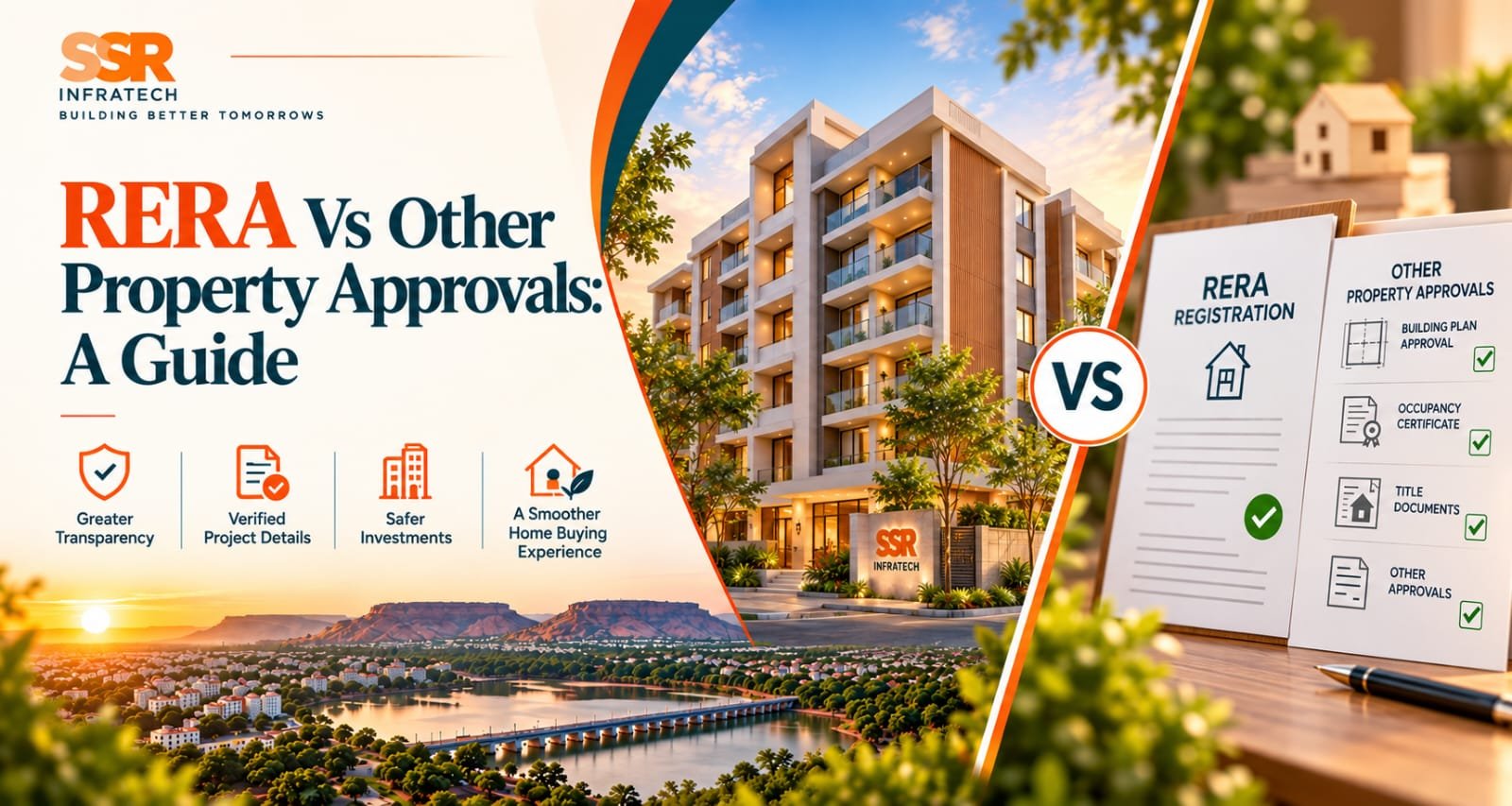
This is the one check you should never skip. RERA is the law that keeps builders honest, and a RERA-registered project puts everything on the government’s record where you can verify it. If you want the full story, we wrote a plain-English explainer — What Is RERA Approved? — but here’s what you need for your checklist.
When you’re looking at RERA approved apartments in Kurnool, confirm:
- Registration status — Is the project actually registered, with a valid RERA number you can see?
- Promoter and project details — Do the builder’s name, the location, and the layout on the RERA record match what you were shown?
- Proposed completion date — The date filed with RERA is the one the builder is legally accountable for.
- Approvals and documents — Land title, approved plans, and the registration certificate should all be available for you to read.
You can check any of this yourself in about five minutes on the Andhra Pradesh RERA website (rera.ap.gov.in) — just search by the project or promoter name and match the details. A quick tip we always share: a genuine builder gives you the RERA number without being chased. If someone says it’s “under process” or changes the subject, slow down.
Understand the Apartment’s Carpet Area and Layout
Two apartments can both be called “1,200 square feet” and give you very different homes to live in. That’s because square footage gets measured in a few different ways, and the difference is real money.
- Carpet area — The actual usable space inside your walls, where you’ll put your bed and sofa. This is what really matters.
- Built-up area — Carpet area plus the walls and the balcony.
- Super built-up area — Built-up area plus your share of common spaces like the lobby, stairs and corridors. This number is always the biggest.
Under RERA, pricing must be based on carpet area, so always ask for that figure in writing. Then look past the numbers at how the home is actually shaped:
- Floor plan and room sizes — Are the rooms usable, or awkward once you place furniture?
- Natural light and ventilation — Does the home get sunlight and a cross-breeze, or will you run lights and fans all day?
- Usable space and balconies — Is the layout efficient, with real open areas, or is a chunk of your money going into passages you can’t use?
Compare Layouts, Not Just Square Footage
When you’re choosing between two apartments, put the floor plans side by side and imagine your own furniture in them. A well-designed home with a slightly smaller carpet area often lives bigger than a poorly-planned one with more square feet. Space you can use beats space on paper every time.
Evaluate Construction Quality and Amenities
Construction Quality
This is the part you can’t see in a brochure but will feel every day for decades. Where you’re allowed to, look closely — and don’t be shy about asking the builder to explain their specifications.
- Materials and structure — What grade of concrete and steel are they using? Good builders are happy to tell you.
- Doors, windows and flooring — Run your hand over them. Quality here signals quality everywhere else.
- Plumbing and electrical work — Neatly done and properly planned, or an afterthought you’ll be repairing in year two?
- Waterproofing and finishing — Ask specifically about waterproofing on terraces and bathrooms. Leaks are the number one regret of new home owners.
Amenities
Amenities are lovely, but be practical about them. A gated community with security, a lift, power backup, parking and clean water sorted is worth more day-to-day than a long list of features nobody uses. Ask two questions about every amenity: will my family actually use this, and what will it cost me to maintain it? And make sure anything promised is on the approved plan — a feature that isn’t filed isn’t really promised.
Understand the Total Cost Before Buying
The price on the banner is almost never the price you finally pay. Plenty of buyers stretch their budget to the base price, then get blindsided by the extras. Don’t be that buyer — get the full picture up front.
The costs that make up your real, final number usually include:
- Base property price (the headline figure, based on carpet area)
- Registration and stamp duty (a government charge on your purchase)
- Applicable taxes such as GST, where relevant
- Parking charges, where they apply
- Maintenance charges (often a deposit up front, then monthly)
- Utility and connection charges for water, electricity and the like
- Any other charges — corpus fund, legal, documentation
Ask for a Complete Cost Breakdown
Ask the builder for one honest, itemised sheet that adds up to the all-in figure — the amount that lands in your bank statement by the time you hold the keys. A straightforward builder will give it to you gladly. If the total keeps shifting every time you ask, treat that as your answer.
Review the Legal Documents and Agreement Carefully
This is the step people rush, and it’s the one that protects everything else. Before you sign, read the papers — and if it helps, pay a property lawyer for an hour of their time. It’s the cheapest insurance you’ll ever buy.
Go through these carefully:
- Sale agreement — Read the whole thing. Every promise you care about should be written into it.
- Project approvals and RERA details — Confirm the approvals and RERA number match the records.
- Title and ownership documents — Make sure the builder clearly owns the land and it’s free of disputes.
- Payment schedule — Know exactly what you pay and when, tied to construction stages.
- Possession terms — The handover date, in writing, with what happens if it’s delayed.
- Cancellation and refund terms — Understand your exit before you commit, not after.
- Maintenance responsibilities — Who handles what, and for how long after handover.
If a builder is comfortable putting everything in writing, that’s a very good sign. If they’d rather keep things on a handshake, that’s a very good reason to pause.
Bonus: Questions to Ask Before Booking an Apartment in Kurnool
Print this, or save it on your phone, and take it to every site visit. Ask all ten, out loud, and watch how the builder responds:
1. Is the project RERA registered, and what’s the number? 2. What is the carpet area of this apartment? 3. What is the complete, all-in cost? 4. What is the expected possession timeline? 5. Which amenities are included? 6. What are the maintenance charges? 7. Which documents can I review before booking? 8. Can I visit one of your completed projects? 9. What payment plans are available? 10.What exactly is included in the quoted price? |
A good builder will answer every one of these without flinching. Any question that gets dodged is worth pressing on.
How to Choose the Right Apartment in Kurnool
It feels like a lot, but it’s really one simple sequence. Take the decision in this order and you’ll rarely go wrong:
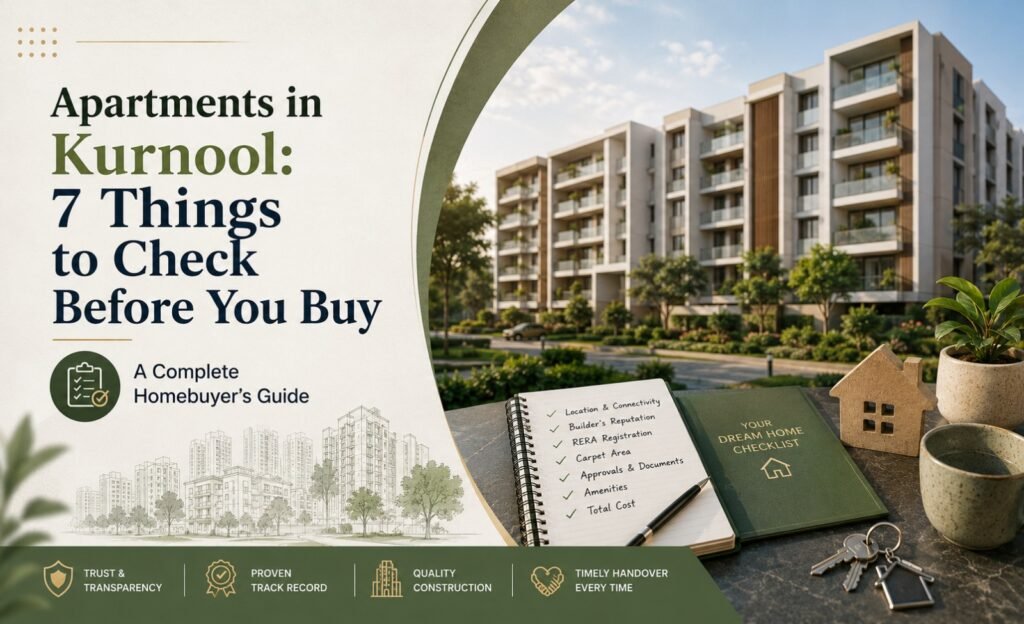
Location → Builder → RERA → Layout → Construction → Cost → Documentation
Start with where the home sits and how it fits your life. Then check who’s building it and whether they’ve delivered before. Confirm RERA and the approvals. Study the layout and the real carpet area. Look hard at construction quality and the amenities you’ll actually use. Get the full cost in writing. And finally, read every legal paper before you sign. Do it in that order, and the choice usually makes itself.
Why Consider SSR Infratech for Your Next Home?
If that checklist feels demanding, good — it should be. We built our company to pass it. SSR Infratech is a Kurnool builder, founded in 2016, and in ten years we’ve handed over homes to more than 1,000 families. We’re 100% RERA compliant, a CREDAI member, and winners of the Indian Concrete Institute’s Outstanding Concrete Structure award in the residential category.
What that means for you is simple. When you enquire about one of our homes — like Nakshatra or HM Grandeur in Doctors Colony — we hand you the RERA number, the approved plan and the full price sheet up front, so you can verify every detail before you decide. You’re welcome to explore SSR Infratech projects, walk a completed building, and talk to families already living there. We think a home should be built with trust, designed with intention, and delivered with integrity — and we’re happy to prove it, document by document.
Ready to see a home in person? Book a free, no-pressure site visit with SSR Infratech. We’ll show you the project, the layouts and the construction quality — and answer every question on your checklist. WhatsApp: +91 99944 04383 · Book a site visit: ssrinfratech.in/contact |
Frequently Asked Questions
What should I check before buying an apartment in Kurnool?
Before buying an apartment in Kurnool, check seven things: the location and daily connectivity, the builder’s track record and delivered projects, RERA registration and approvals, the carpet area and layout, construction quality and amenities, the complete all-in cost, and every legal document including the sale agreement and possession terms.
How do I verify whether an apartment project is RERA registered?
Visit the Andhra Pradesh RERA website (rera.ap.gov.in), open the registered projects section, and search by the project name, promoter name, or RERA number. Confirm that the promoter, location, layout, carpet area and completion date match what the builder told you, then download the registration certificate for your records.
What is the difference between carpet area and built-up area?
Carpet area is the actual usable space inside your apartment’s walls — where you live. Built-up area adds the walls and balcony, and super built-up area also adds your share of common spaces like the lobby and stairs. Under RERA, pricing must be based on carpet area, so always ask for that figure.
What documents should I check before buying an apartment?
Check the sale agreement, the land title and ownership papers, the approved building plans and project approvals, the RERA registration details, the payment schedule, the possession terms, and the cancellation and refund clauses. If in doubt, have a property lawyer review them before you sign.
What additional costs should I consider when buying an apartment?
Beyond the base price, budget for registration and stamp duty, applicable taxes such as GST, parking charges, maintenance charges, utility and connection charges, and any corpus or legal fees. Ask the builder for one itemised sheet showing the complete all-in cost before you book.
How do I choose a reliable builder in Kurnool?
Look at how many projects the builder has actually completed and delivered on time, visit a finished project to inspect quality, and talk to residents already living there. Recognition such as RERA compliance, CREDAI membership or an ICI award is a helpful sign that outside bodies have verified the builder’s work.
Is location important when buying an apartment in Kurnool?
Yes — location is the one thing you can never change after buying. Check the apartment’s connectivity to main roads, schools, hospitals, shops and your workplace, the quality of the neighbourhood at different times of day, and public transport access. A well-connected location also protects your resale value.